
Why your “SPF 50” might not be 50
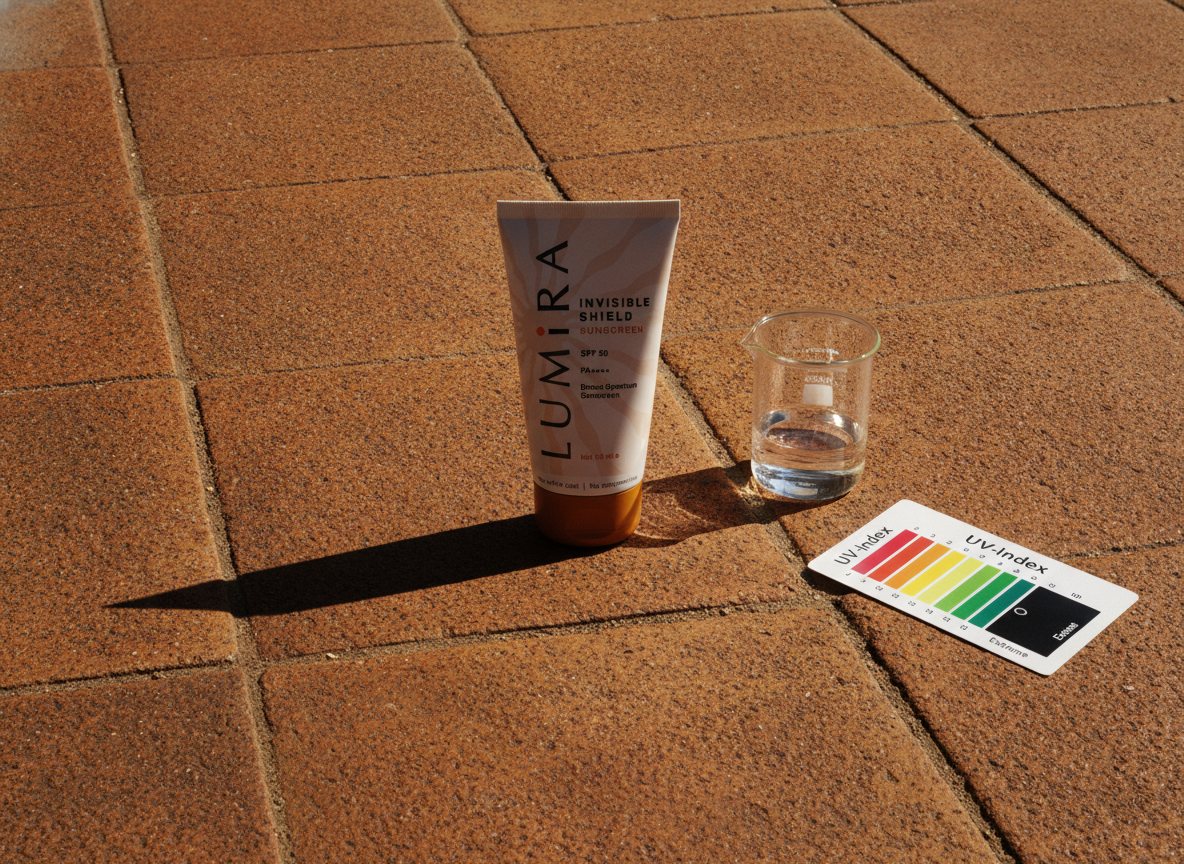
Walk any pharmacy aisle in India and every tube shouts the same number: SPF 50. It has become wallpaper — which is exactly the problem, because the number on the front and the protection on your face are two different things.
What SPF 50 actually means
SPF is measured in a lab, on human volunteers, at a precisely applied dose: 2 mg of product per square centimetre of skin. That's roughly two full finger-lengths for the face and neck — two to three times what most people actually apply. Use half the dose and you don't get half the protection; because the maths is exponential, an SPF 50 applied at real-world thickness can behave closer to an SPF 15.
The Indian complication
India has had a quieter, second problem: claim inflation. Independent lab checks in several markets have repeatedly found sunscreens delivering less than the number printed on the pack. In-vitro shortcuts, unstable filter systems that degrade in heat, and formulas never re-tested after "minor" reformulations all contribute. In a country where the UV index sits above 8 for most of the year, that gap matters more, not less.
How to read a label like a sceptic
- Look for the method, not just the number. In-vivo testing to ISO 24444 (the method behind BIS IS 17494) on real human skin is the gold standard. "Tested" alone can mean a computer model.
- PA++++ matters more than you think. SPF measures UVB (burning). PA measures UVA — the rays that tan, pigment and age you. For Indian skin concerns, UVA is the number that counts.
- Photostability is the silent variable. Older filters degrade in sunlight — some lose meaningful protection within an hour or two. New-generation filters (the Tinosorb and Uvinul families) are engineered to stay put.
- Batch, not brand. A formula tested once, years ago, in someone else's lab says little about the tube in your hand.
Where we stand
Lumira's position is simple: the number on our tube must be earned by the batch in your hand. Every Lumira batch goes through in-vivo SPF and PA testing (ISO 24444 / BIS IS 17494), and we publish the report against the batch number — before dispatch, not after questions. The first batch's report lands on our SPF, tested page as soon as the panel completes.
Until then: apply the full dose, reapply through the day, and treat any number you can't verify as marketing.


